Thermal camera fire detection on waste and recycling sites
Heat builds inside the pile long before smoke shows. How a Mobile Tower Platform keeps thermal camera fire detection above a stockpile that moves every week.
In this article
By the time there is smoke over the pile, the decision has already been made for you. A lithium cell, a pocket of trapped heat, a load that came in warm: the temperature rise starts deep inside the material and stays invisible from the ground for hours.
Thermal camera fire detection only works if the camera is looking at the right heap from the right angle, and on a waste or recycling site the heaps move every week. This article covers what that does to a fixed detection design, and how a Mobile Tower Platform keeps the thermal position aligned with the risk instead of with last year’s site plan.
The site changes faster than the installation
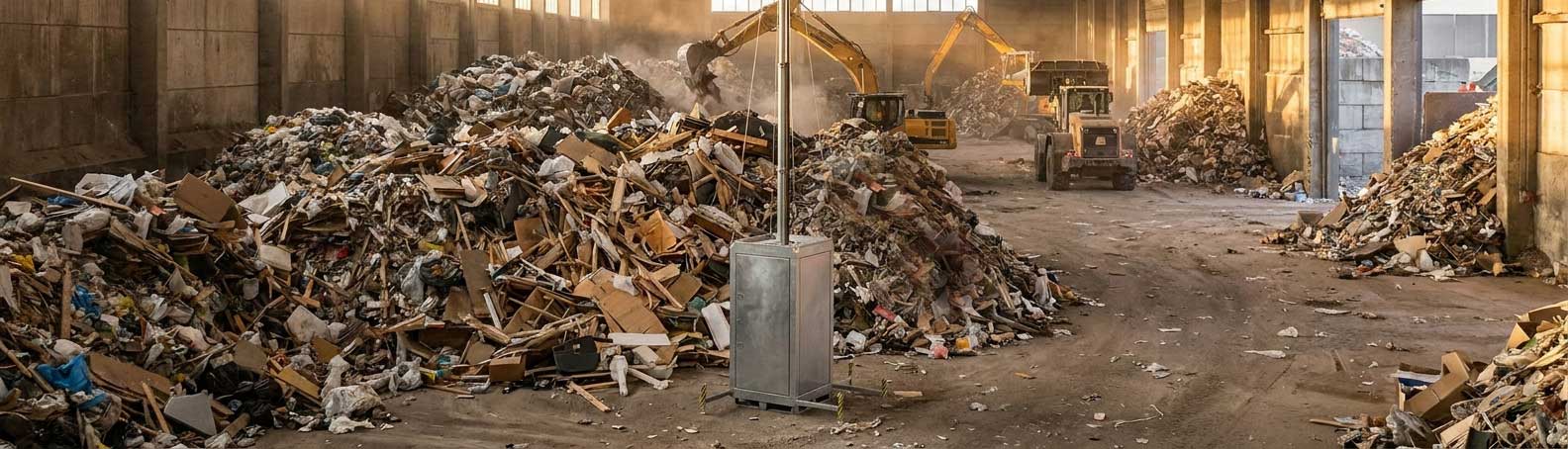
Waste facilities are in constant motion. Material comes in, gets sorted, gets stacked, gets shipped. Storage zones shift with throughput, with contract changes and with the season, and the bay that held inert rubble in March is holding baled plastics in September.
A fixed thermal camera is specified against one layout. Once it is bolted to a pole, its alarm zone stays where it was commissioned. The pile it was watching moves twenty metres and the detection design quietly stops matching the site, usually without anyone raising it until an incident does.
That is not a camera problem. It is a mounting problem.
Why height decides what a thermal camera can see
At ground level a stockpile hides itself. The face of the heap blocks the view of everything behind it, and a thermal camera can only report on the surface it can see.
Six metres of elevation puts the sensor above the material and gives it a depression angle across the top of the pile, which is where trapped heat tends to break the surface first. The same height widens the area one camera can hold, so a site covers more bays with fewer positions.
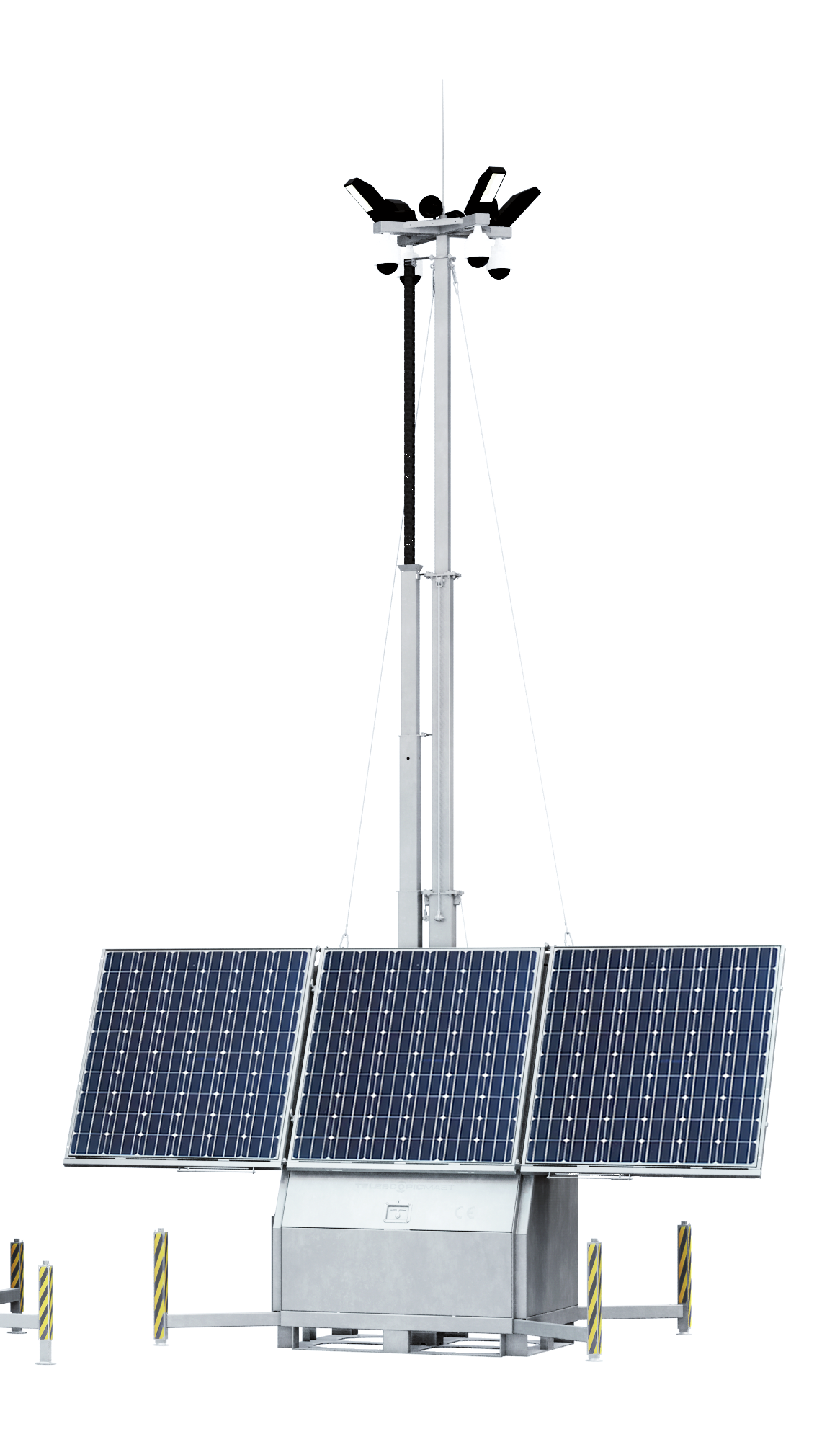
Stability matters as much as height. The mast is held on four stainless steel stay cables so the frame stays still in wind, and a still frame is what keeps a thermal alarm zone meaningful. A camera that drifts turns every gust into an event, and an operator who stops trusting the alarms is worse than no alarms at all.
Detection that follows the heap
A platform on a galvanised steel base can be repositioned by the site team in under 15 minutes. No civils, no cable pull, no contractor visit, no waiting for a slot in someone else’s programme.
In practice that means the thermal position sits next to whatever is currently the highest risk material: the baled fraction, the new intake bay, the area that ran hot last summer. When operations reorganise the yard, detection moves the same week rather than the next capital cycle.
For operators running several sites or temporary transfer stations, the same units rotate between locations instead of each site carrying its own fixed installation. See how that applies to thermal detection for heat and fire, remote site security and monitoring and theft prevention and asset protection, or at sector level across industrial and commercial sites.
What the platform does not do
Being direct about this saves a difficult conversation later. A TelescopicMast platform ships as a galvanised steel mast and cabinet with pre-drilled mounting points. No thermal camera. No analytics. No SIM, no VMS, no alarm handling.
That is deliberate. Detection thresholds, radiometric calibration and the alarm workflow belong to the system you design, and a site’s insurer may already name a sensor brand. A brand neutral platform lets you fit it. Technology Partners including Axis, Scylla, Teltonika, Milestone and SFC Energy supply what runs on top. The platform is the foundation the detection system is built on, and nothing more than that.
For installers and system integrators, that is usually the deciding factor: one mounting platform that never conflicts with the sensor the client has standardised on.
Built for a hard environment
A waste site is dust, corrosion, plant movement and unsupervised hours. Every platform is fully galvanised steel with a service life of ten years or more, with lockable doors, lockable top covers, anti-climb barriers, anti-vandal spikes and a double brake winch system. Double opening doors give access for servicing without dismantling the payload.
For the file: CE certified by TÜV Rheinland with a 95 page test document, built under ISO 9001, and certified to ANSI and NEN standards. Insurers and environmental regulators tend to ask, and fire prevention plans are increasingly a condition of the permit rather than a nice to have.
Frequently asked questions
How high does the thermal camera need to be on a waste site?
High enough to see across the top of the tallest stockpile rather than into its face. Six metres covers most transfer stations and sorting yards; where bays are stacked higher, the MSB-Premium XL reaches 900 cm and the trailer mounted TMT masts go further again.
Does the platform include the thermal camera or the detection software?
No. You specify the sensor, the analytics and the alarm route. The platform supplies the height, the stability, the cabinet space and the pre-drilled mounting points.
Can it run where the site has no power at that corner?
Yes. Mains where it exists, and battery, solar or fuel cell where it does not. Runtime depends on the draw of the thermal camera and the radio you fit, so the battery bank is sized to the payload.
How often can it be moved?
As often as the yard changes. Setup and takedown are under 15 minutes with no groundwork, so repositioning is a site team job rather than a project.
Work it through against your site layout
Three things decide the answer on a waste site: how tall the piles get, how often the bays are reorganised, and what the thermal camera and radio draw between them. Give us those and the platform choice follows. What does your yard look like right now?