

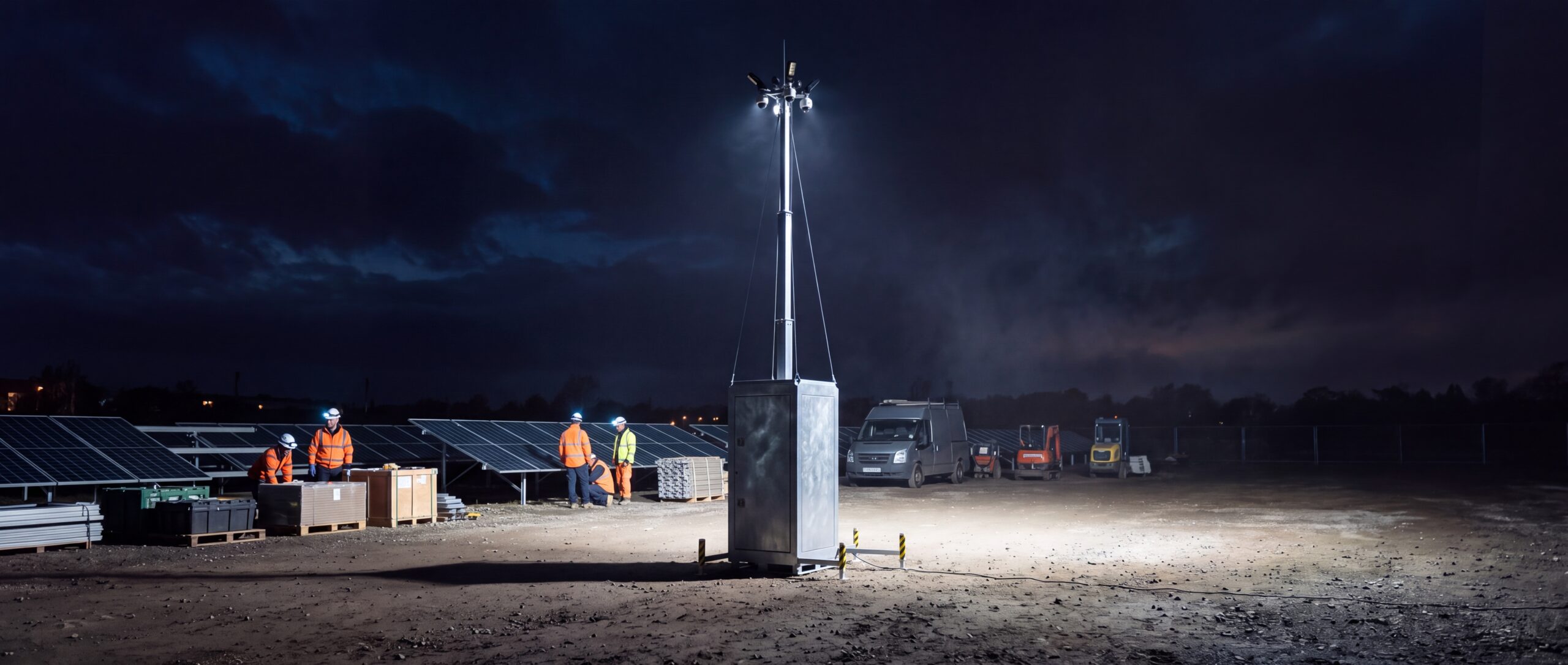
Mobile Light Tower Without an Engine Underneath It
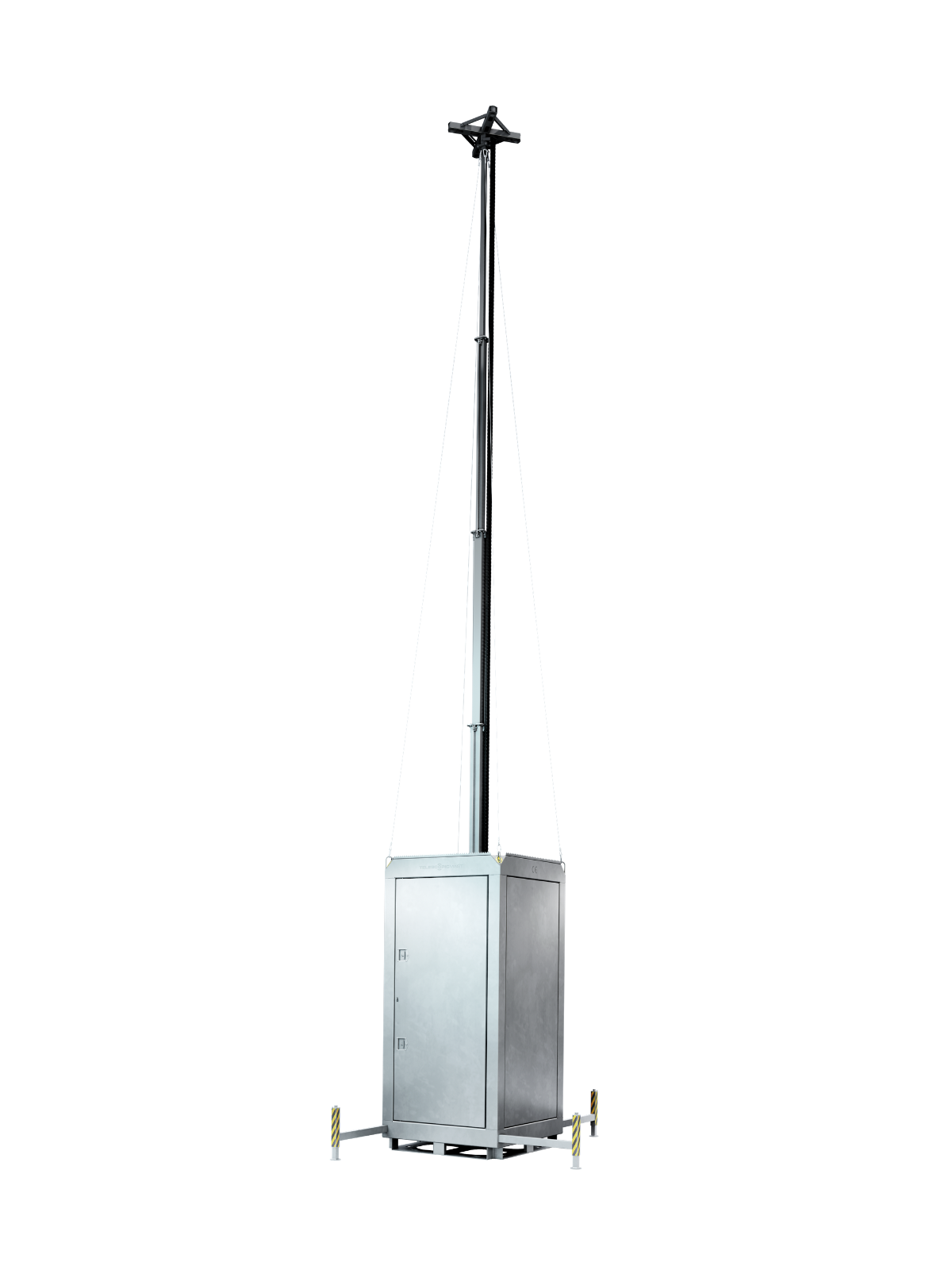
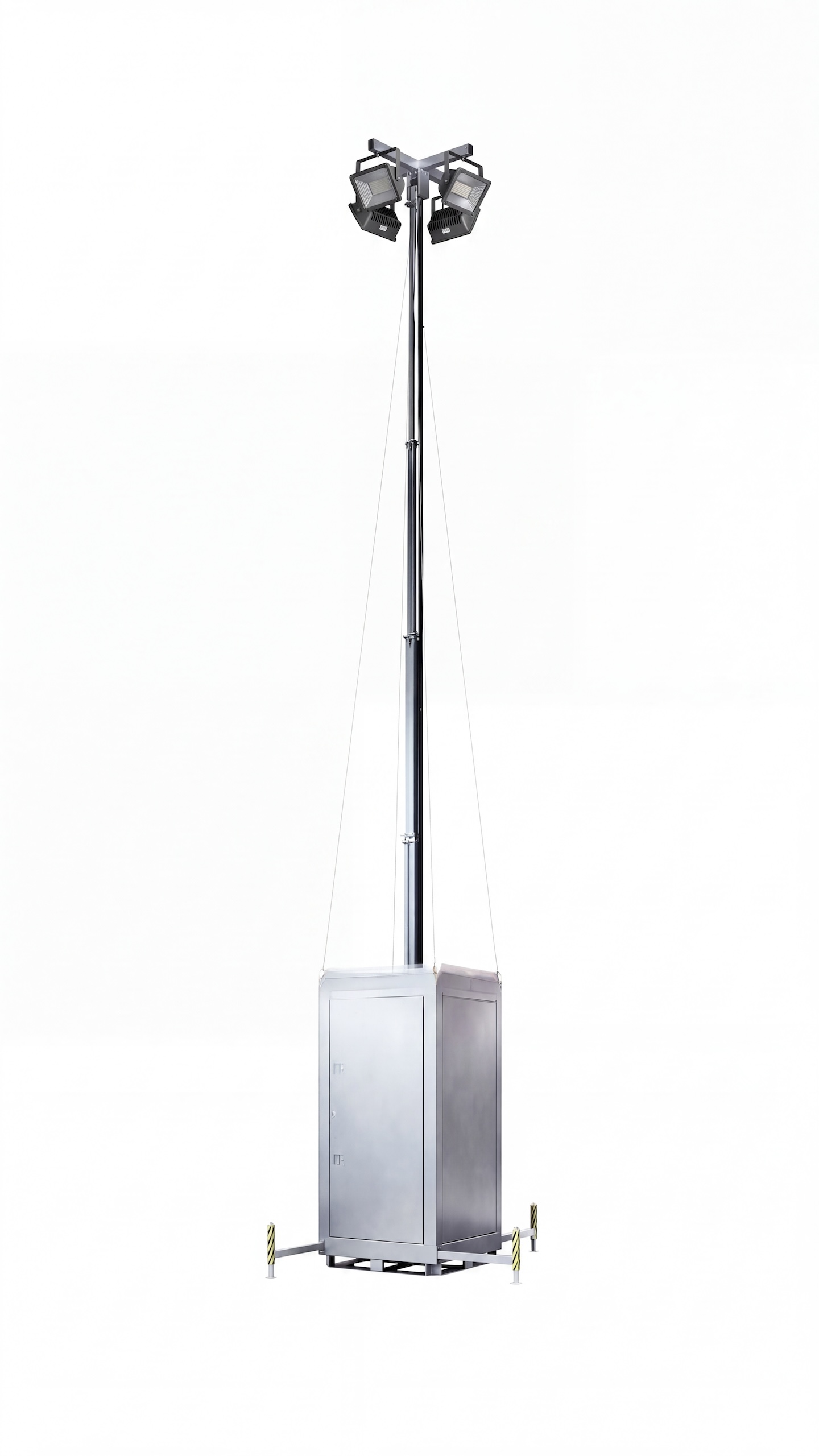
A diesel light tower burns fuel and has to be refueled and serviced on site. A Mobile Tower Platform puts your floodlights 20 feet up in under 15 minutes on a galvanized steel base, with no engine, no fuel tank and no exhaust, and carries your cameras on the same mast.

A wider pool, so fewer units per site
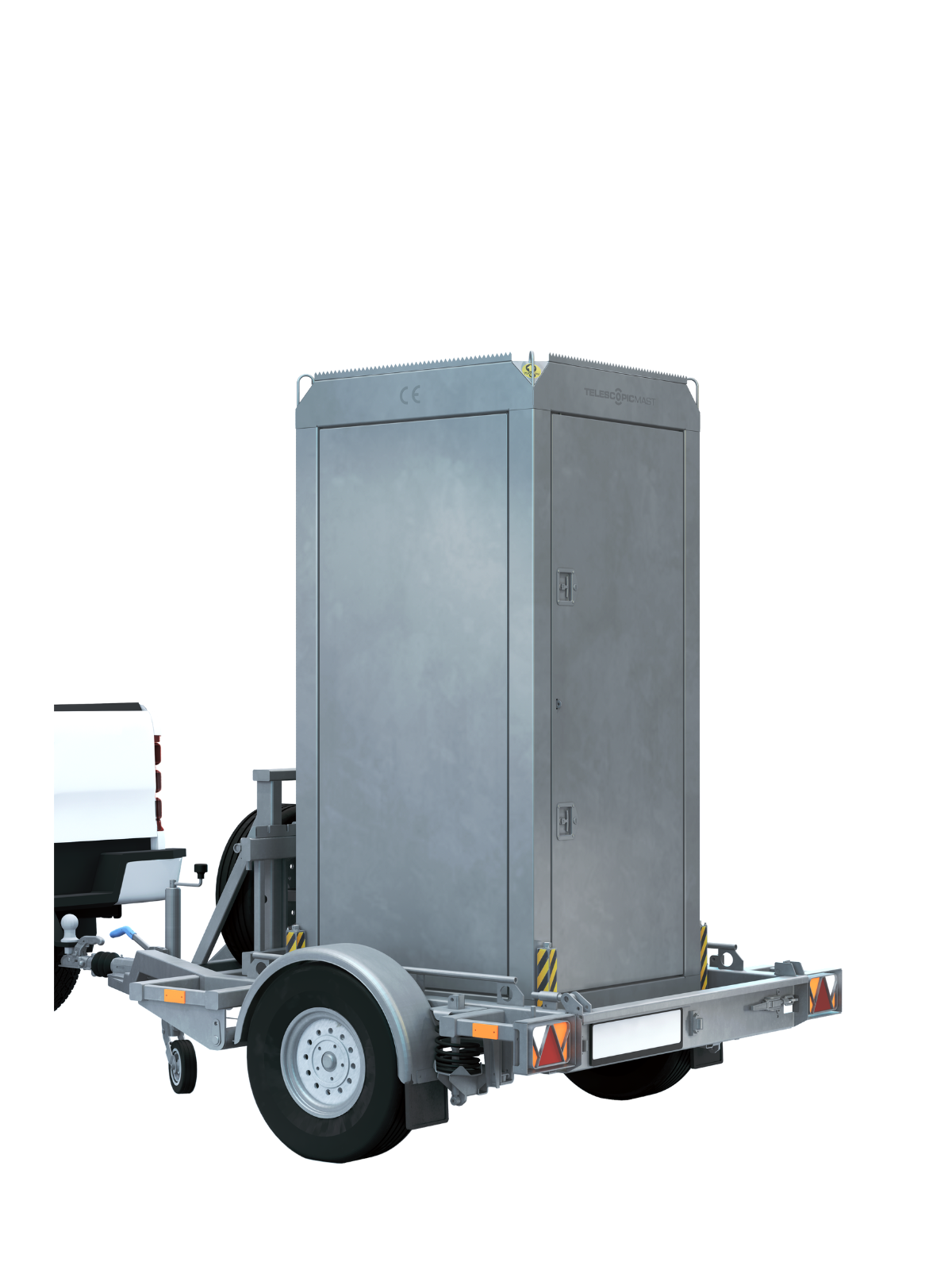
No groundwork, no crane, one person
Utility power, battery, solar or fuel cell
95 pages of test documentation
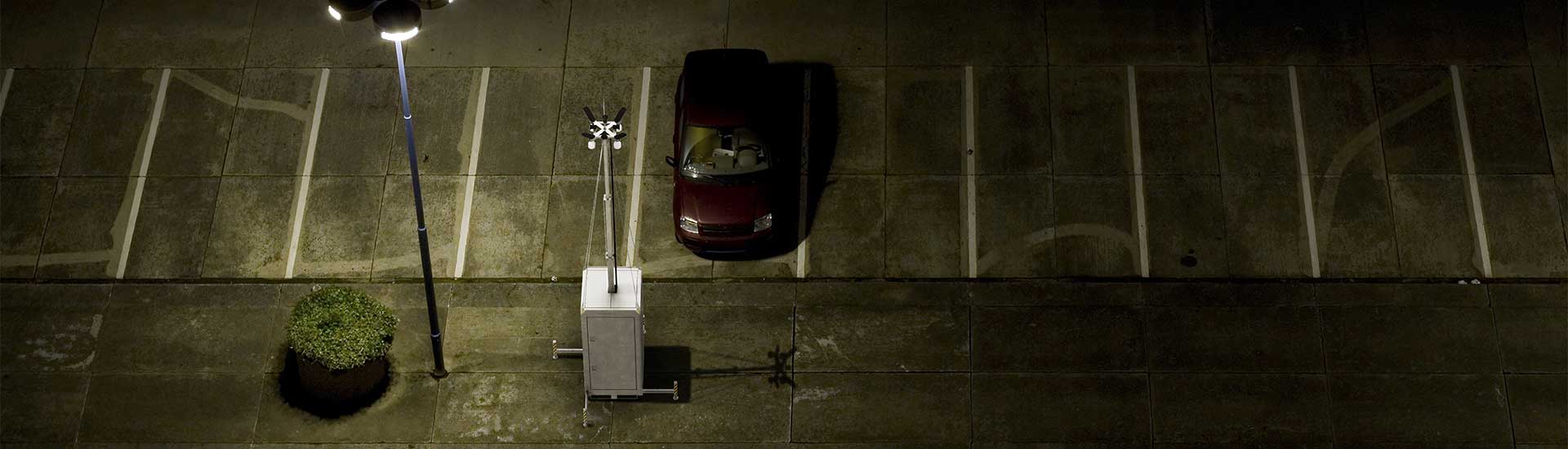
What the Platform Contributes to Site Lighting

Height Does the Work a Second Unit Would Do
A luminaire at 20 feet lights a wider pool at a shallower angle than the same luminaire at three. That means fewer positions to cover a laydown area, fewer cables run across ground vehicles have to cross, and less glare at eye level for the people working under it.

Nothing Under It That Needs Refueling
There is no engine in the base, so there are no engine hours, no service interval driven by them, no exhaust at ground level and nothing to siphon. Power comes from wherever the site allows it, and the galvanized cabinet has room for your own batteries.

One Mast, Lighting and Cameras Together
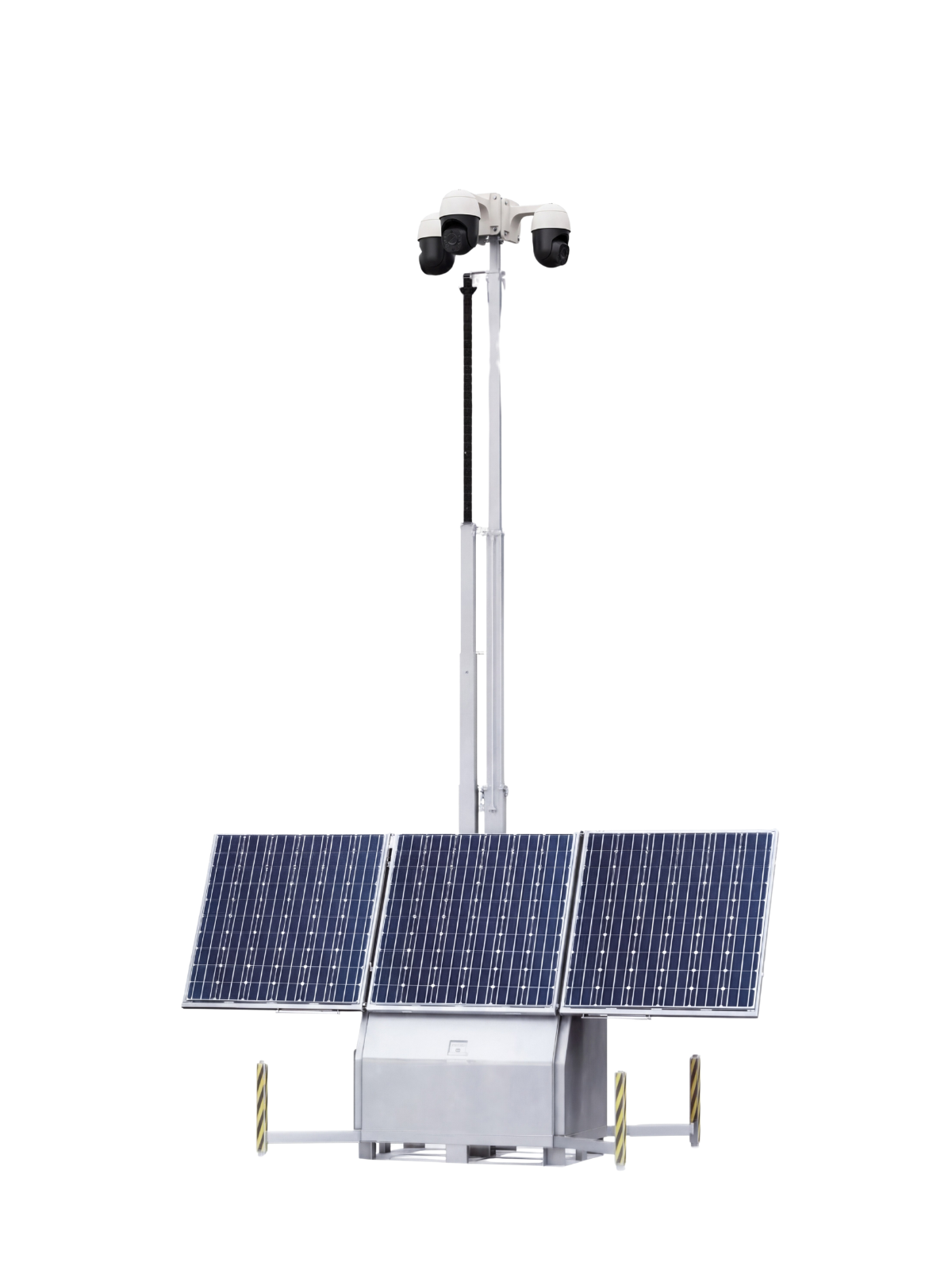
You are already paying to get something into the air and to stabilize it. Lighting deters, a camera evidences, a speaker challenges and a router reports, and all four can sit on the same mast top instead of on four separate bits of rented equipment.

It Stays Pointed Where You Aimed It
A floodlight that swings in the wind throws its beam somewhere new every gust, which is how a neighbor complaint starts and how a camera on the same head loses its scene. Four stainless steel 316 stay cables and four extendable stabilizers hold the head where it was set.
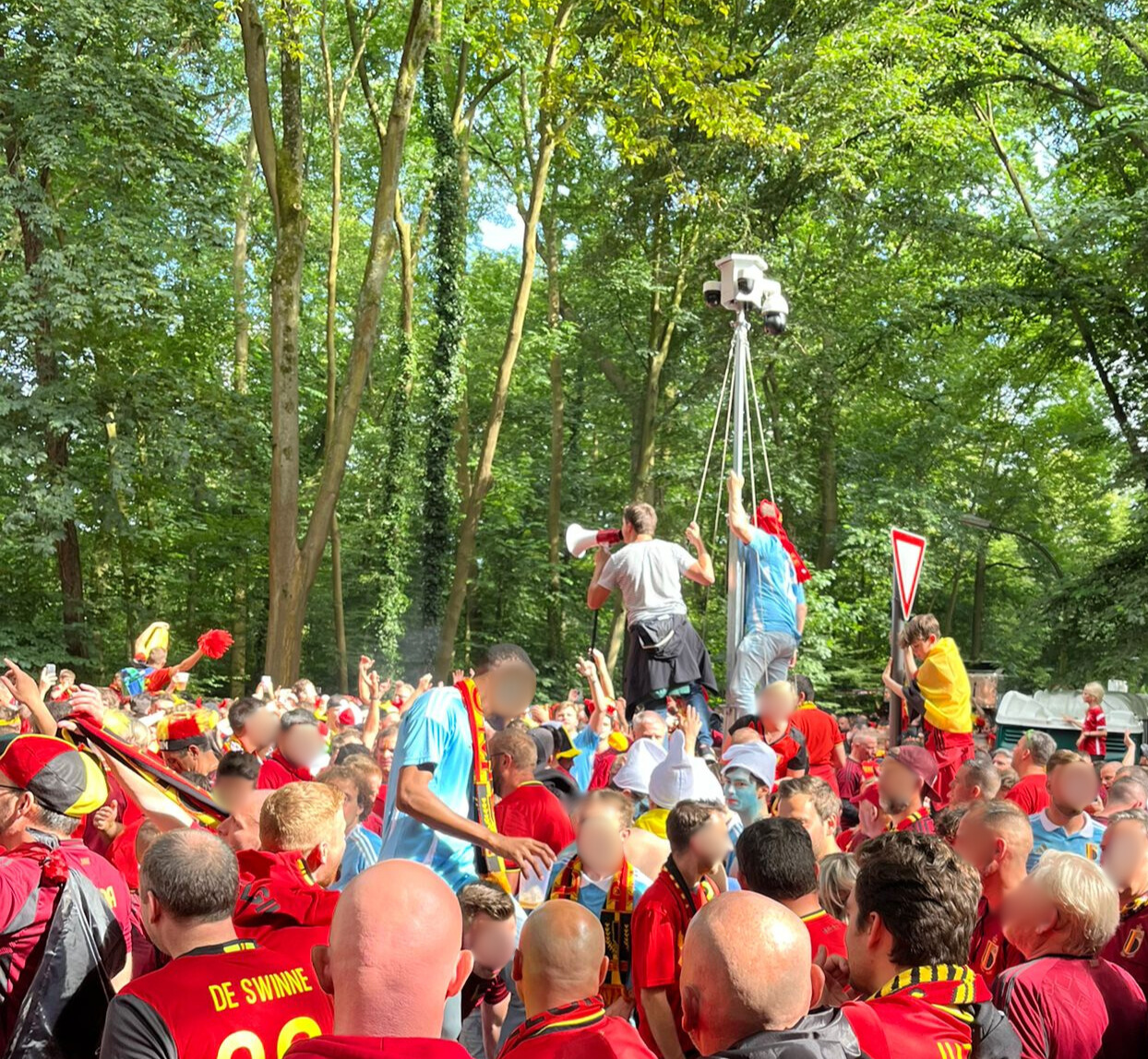


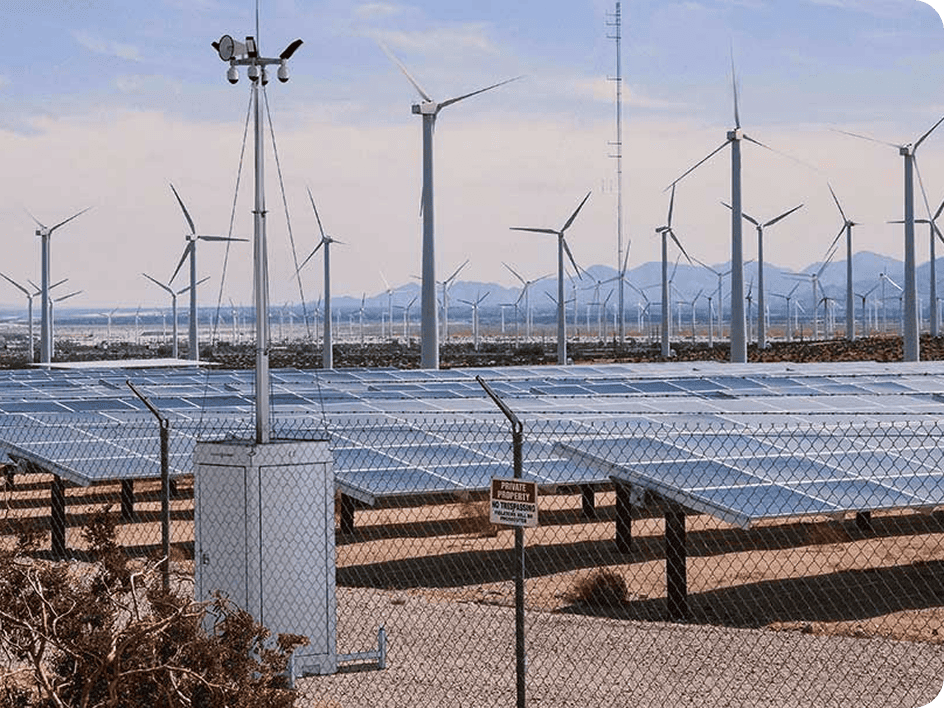
Fifty platforms working through Icelandic winters on solar power
Vörn secures construction sites and events across Iceland, where daylight is short for months of the year and weather conditions limit what can be installed. Their platforms run 4K PTZ cameras with thermal and infrared night vision, deploy in under 15 minutes and are repositioned daily without a specialist crew.
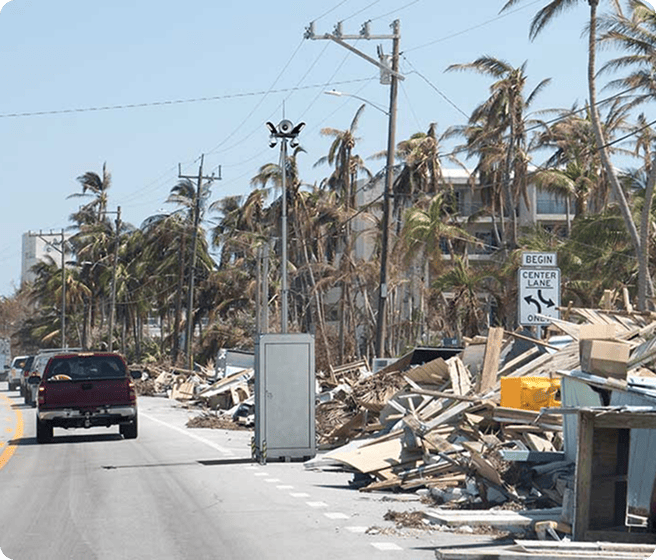
45 platforms reporting into an operator's own certified control room
Vollmergruppe secures infrastructure projects, construction sites, parking lots and vacant properties, and runs a TUV and VdS certified control center of its own. Physical guarding was expensive and hard to scale across locations that change every few weeks. Light on an empty compound is only half an answer if nobody is watching what it lights, which is the half their control room supplies.
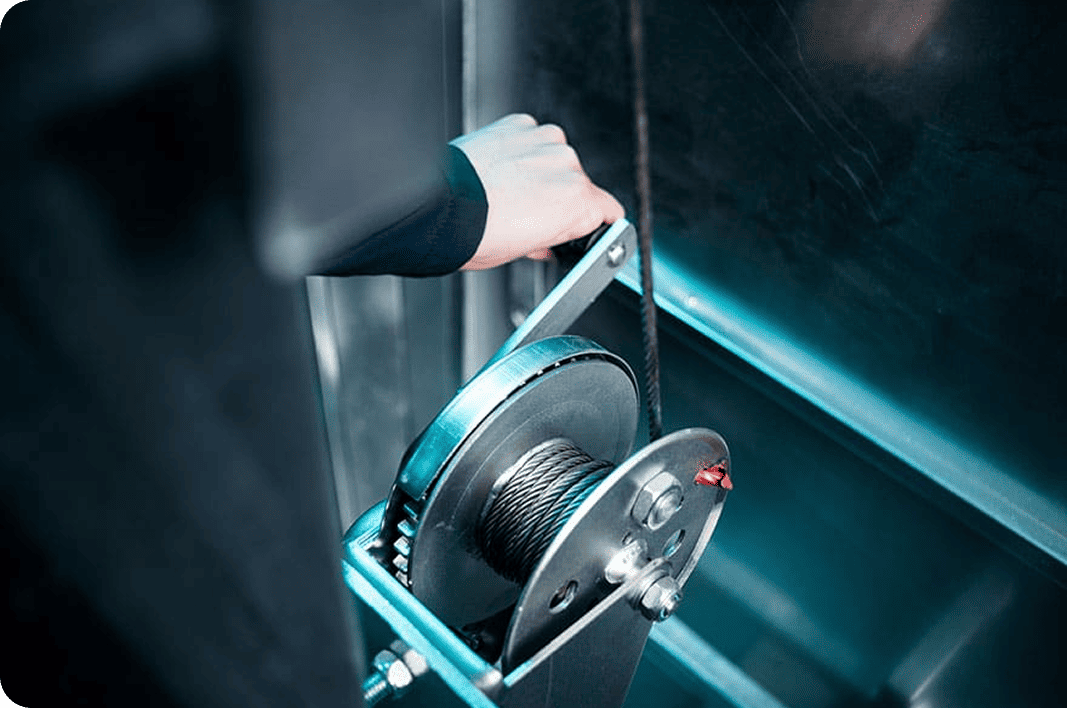

LED Floodlighting
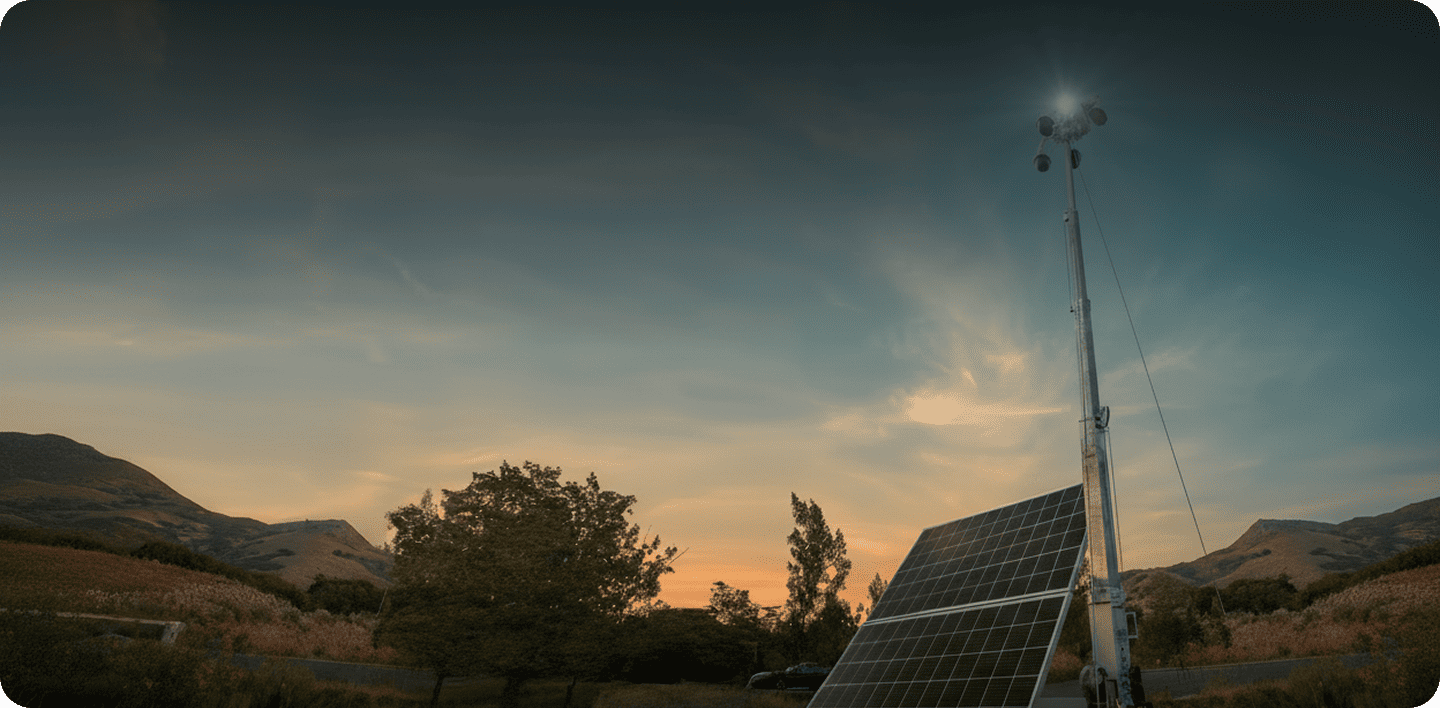
Power and Runtime
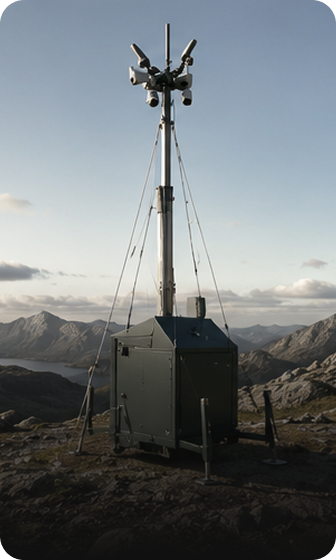
Cameras and Verification
Audio and Public Address
Control and Connectivity
LED Floodlighting
Beam angle decides almost everything. A narrow asymmetric optic aimed down from 20 feet puts light on the work face and keeps it off the boundary, where a wide symmetric flood at low level lights the neighbors as well as the job. Color temperature and glare rating are worth specifying rather than accepting.
Common applications:
- Task lighting over work faces and excavations
- Compound, laydown and haul route lighting
- Event build, show and breakdown
Important notice
TelescopicMast does not supply these accessories. Integration is done with technology partners based on your requirements.
Power and Runtime
Lighting is the heaviest electrical load a mast is likely to carry, and runtime is arithmetic rather than a promise. Add up the luminaire wattage, the hours you actually need it lit, and the worst month of the year, then size the battery and the source against that. Utility power, batteries, solar and fuel cells all fit the same cabinet.
Common applications:
- Mains supply where the site already has one
- 660 W solar on the MSB-Edge with your own batteries
- Hydrogen or methanol fuel cells for the dark months
Important notice
TelescopicMast does not supply these accessories. Integration is done with technology partners based on your requirements.
Cameras and Verification
Light on its own deters. Light with a camera behind it also evidences, and the two work better on one head than on two separate stands, because the illuminated scene and the field of view are aimed from the same point. Lighting also lifts the image quality a color camera can give you after dark.
Common applications:
- Color imaging after dark instead of infrared only
- Lighting triggered by detection or by schedule
- Verified alarms into your alarm receiving center
Important notice
TelescopicMast does not supply these accessories. Integration is done with technology partners based on your requirements.
Audio and Public Address
A lit compound with a speaker on it lets an operator say something before anyone calls the police. On an event site the same head can carry announcements and marshaling audio during the build, then a security challenge overnight.
Common applications:
- Two way audio from the control room
- Marshaling and announcements during event build
- Spoken warnings before an escalation
Important notice
TelescopicMast does not supply these accessories. Integration is done with technology partners based on your requirements.
Control and Connectivity
Remote switching, dimming profiles and a curfew schedule keep the lighting inside the permit conditions without sending a van to site at night, and 4G or 5G carries both the control channel and the camera stream.
Common applications:
- Remote switching and dimming from the control room
- Curfew profiles for sites with planning conditions
- 4G and 5G on the same mast as the lighting
Important notice
TelescopicMast does not supply these accessories. Integration is done with technology partners based on your requirements.


Get in touch
Have questions about our Mobile Tower Platforms? Our sales team is ready to help you find the perfect solution for your mission needs.