Remote Site Security for
Critical Infrastructure & Energy

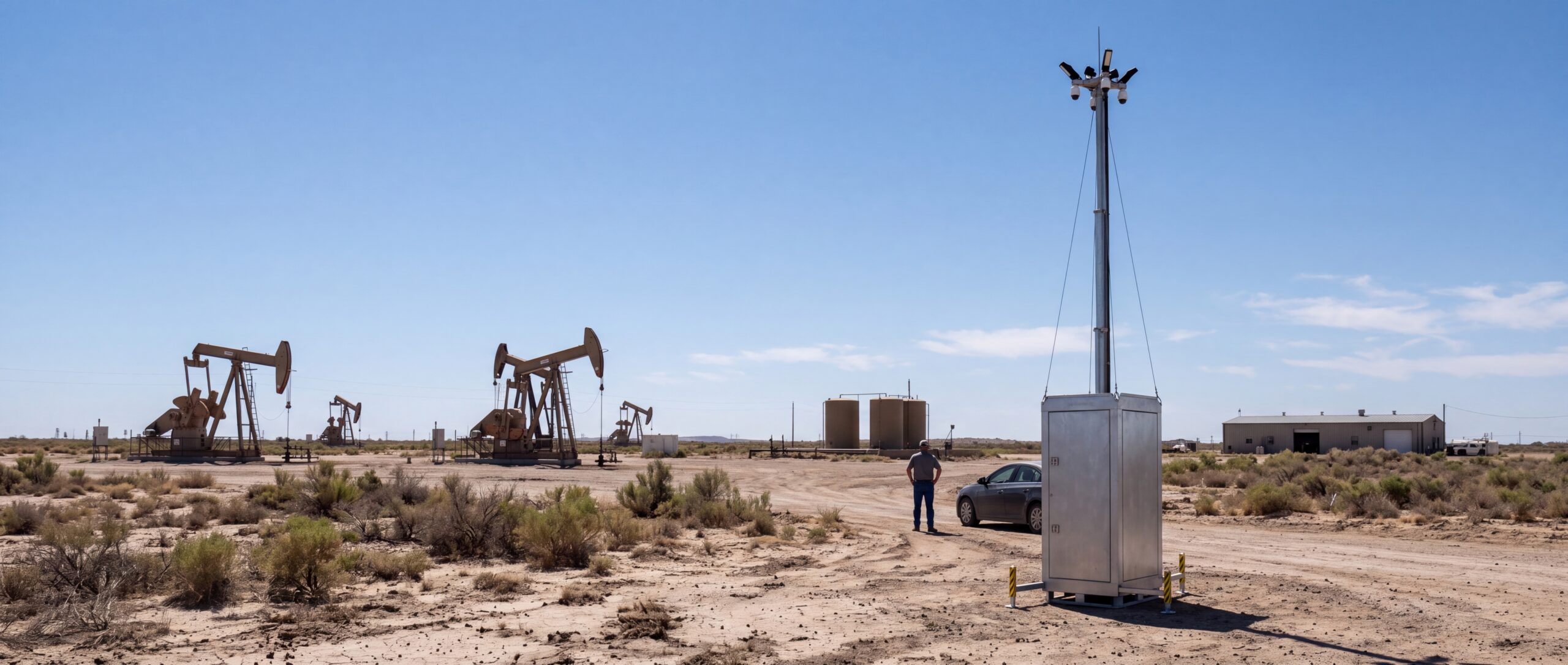
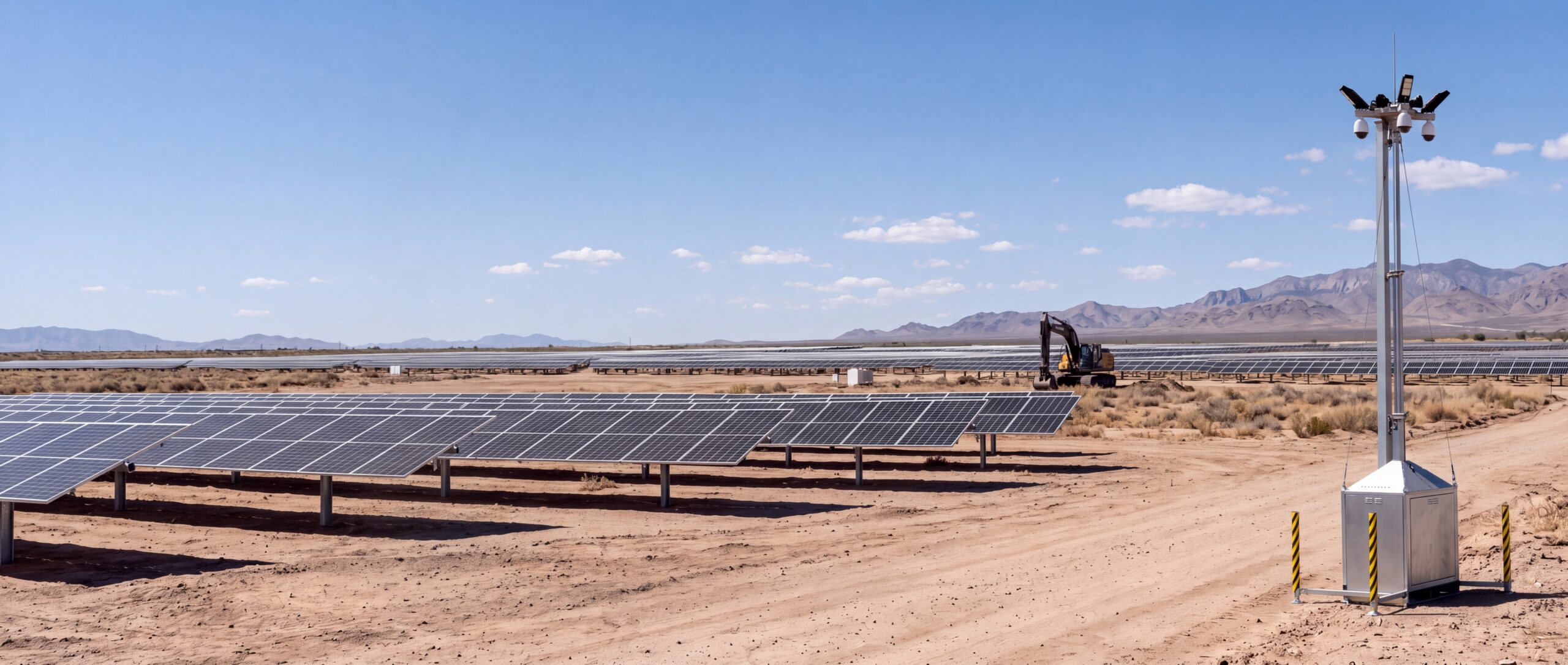
A substation on a back road. A 100 acre solar park with one access track. A pumping station nobody visits for a fortnight. The asset is worth millions, the copper inside it is worth one night’s work, and the perimeter is a fence and a warning sign. A Mobile Tower Platform puts cameras 20 feet up in 15 minutes and runs off-grid for weeks, at the point where the risk actually sits.

Off-grid for weeks

Solar, batteries, hydrogen or methanol fuel cells

Cameras at 20 feet

Out of reach from ground level

CE by TUV Rheinland

95 pages of test documentation

6 months to 3 years

Typical deployment on a single site

The Asset Is Fixed. The Threat Picture Is Not.

Cable and copper leave energy sites because the resale market is immediate and the site is empty. On an unmanned asset the loss is often discovered days later, when a technician arrives for a scheduled visit and finds the cable trench open.

Fixed CCTV struggles here for two reasons. The perimeters are long and mostly empty, so covering them properly costs more than the risk justifies. And the risk point moves: during construction it is the inverter compound, after commissioning it is the cable runs, and after an outage it is whichever bay the contractor left open.

What a remote asset needs is height at a chosen point, power it brings itself, a data link over cellular, and the freedom to stand somewhere else next quarter.

Common applications:

  • Cable and copper theft prevention
  • Perimeter watch across large open areas
  • Thermal detection on unmanned assets
  • Cover during build and commissioning

Documentation, Neutrality and an Asset That Outlives the Electronics

Critical infrastructure procurement starts with paperwork. Every platform is CE certified by TUV Rheinland, backed by a 95 page test and measurement document, and built under an ISO 9001 quality management system. ANSI certification covers deployments outside Europe. On many European sites that documentation is a condition of entry, not a nice to have.

What goes on the mast stays your specification. The platform is supplied as a galvanized steel shell and mast, without cameras, sensors or antennas, which typically costs 15 to 20 percent less than a pre-built tower carrying equipment you did not choose. The enclosure then stays serviceable long after the camera technology is due for replacement, so electronics get upgraded without replacing the platform.

The steel is 100 percent recyclable, production runs on renewable energy and heat is recovered during galvanization, which supports UN Sustainable Development Goals 7, 8, 11 and 12 in your own ESG reporting.

Where it earns its place:

  • Solar parks and wind farms
  • Substations and grid connection points
  • Water, gas and pumping stations
  • Data centers, refineries and waste sites

Applications in Critical Infrastructure & Energy

Eight ways asset owners, utilities and the integrators specifying for them put a Mobile Tower Platform to work on an unmanned site.

Cable & Copper Theft Prevention

Cable trenches, inverter compounds and switchgear are the target. Height, visible presence and recorded footage change the calculation before the ground is opened.

Perimeter Watch Across Large Open Areas

A mast at 20 feet with a 360 degree camera covers ground that would take a line of fixed poles, and stands where the risk is rather than where the ducting happens to run.

Thermal Detection on Unmanned Assets

Thermal cameras pick up heat at a distance and hold up in rain, fog and darkness, which is when an approach across an empty solar park actually happens.

Off-Grid Power for Long Deployments

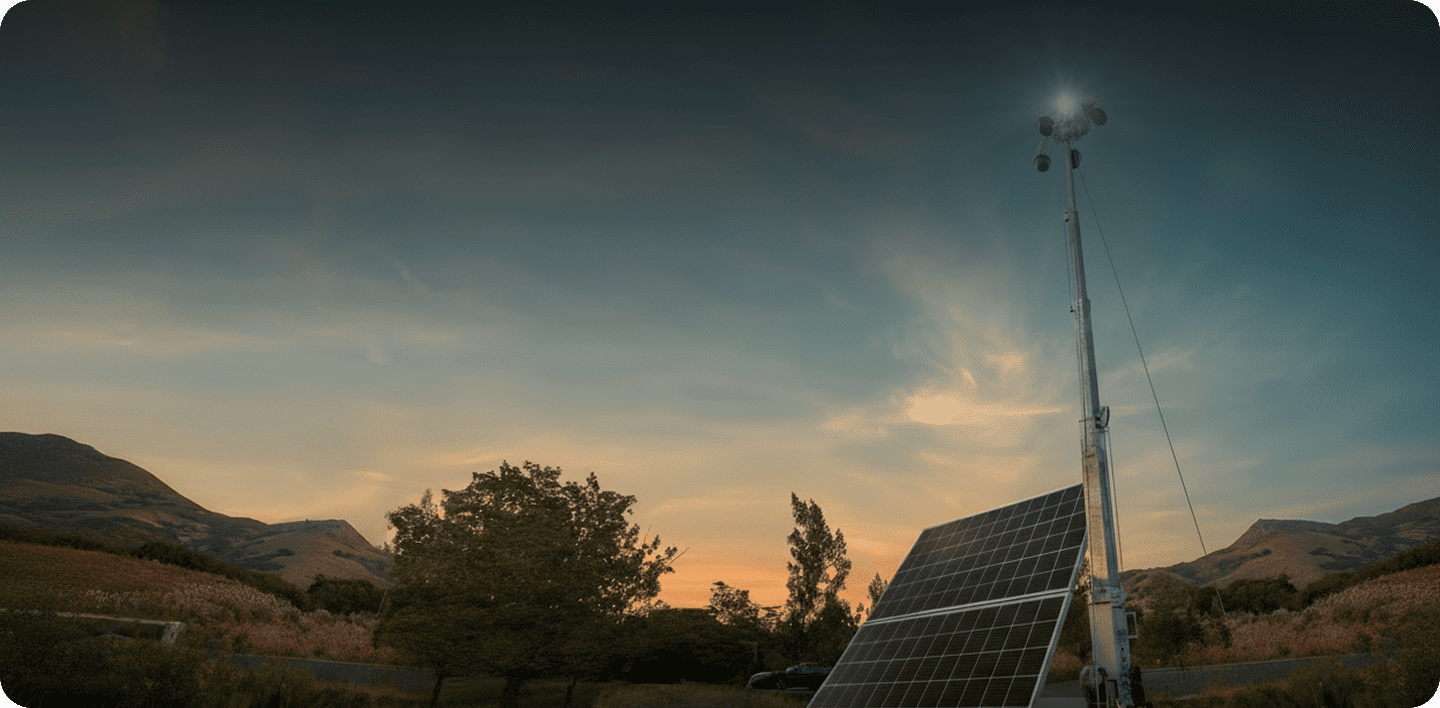
Batteries, solar panels, hydrogen and methanol fuel cells fit inside the cabinet, so a position stays live for weeks where there is no mains supply to tap.

Cover During Build and Commissioning

The permanent security system arrives last. A platform covers the site from groundworks to handover, then moves to the next project in the pipeline.

Heat Detection at Waste and Recycling Sites

Self-heating in stored material is a fire risk before it is a security risk. Thermal imaging at height spots a hot spot in a bunker while it is still a hot spot.

Data Center and Refinery Perimeters

High consequence sites with strict access control still have contractor gates, laydown areas and expansion plots that no permanent camera covers yet.

Remote Monitoring over 4G and 5G

Cellular uplink on the same mast as the cameras feeds a control room or an alarm receiving center from an asset with no fixed line.

Built for Unmanned Sites

Equipment Out of Reach

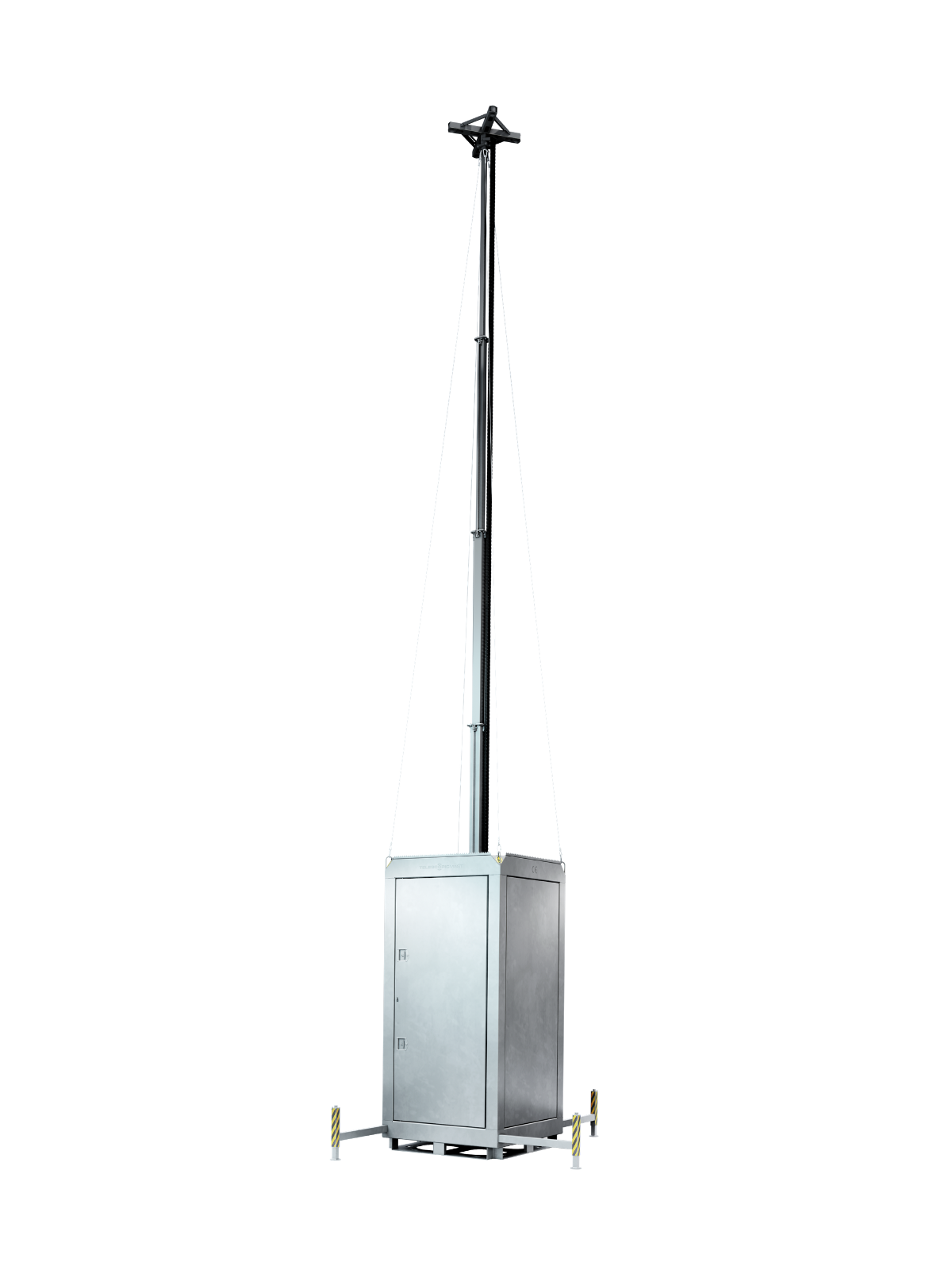
Cameras mounted below 15 feet can be attacked from the ground. At 20 feet they are out of reach, and the cabinet underneath is built to keep it that way.

Stable Pictures, Fewer False Alarms

Camera shake at 20 feet is what generates nuisance alarms on a remote site nobody can attend quickly. Four stainless steel 316 guy cables hold the top still.

Weeks Without Mains Power

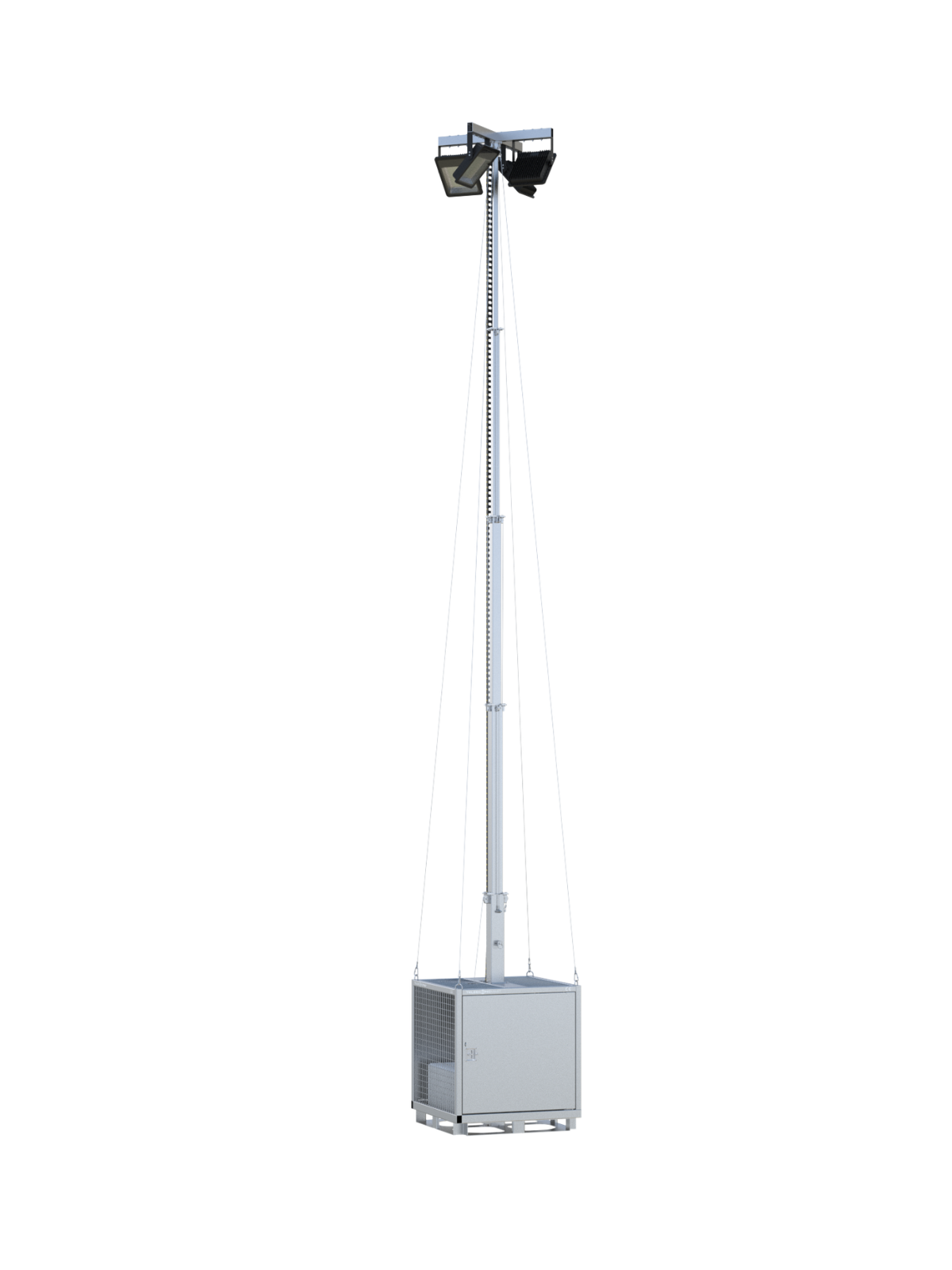
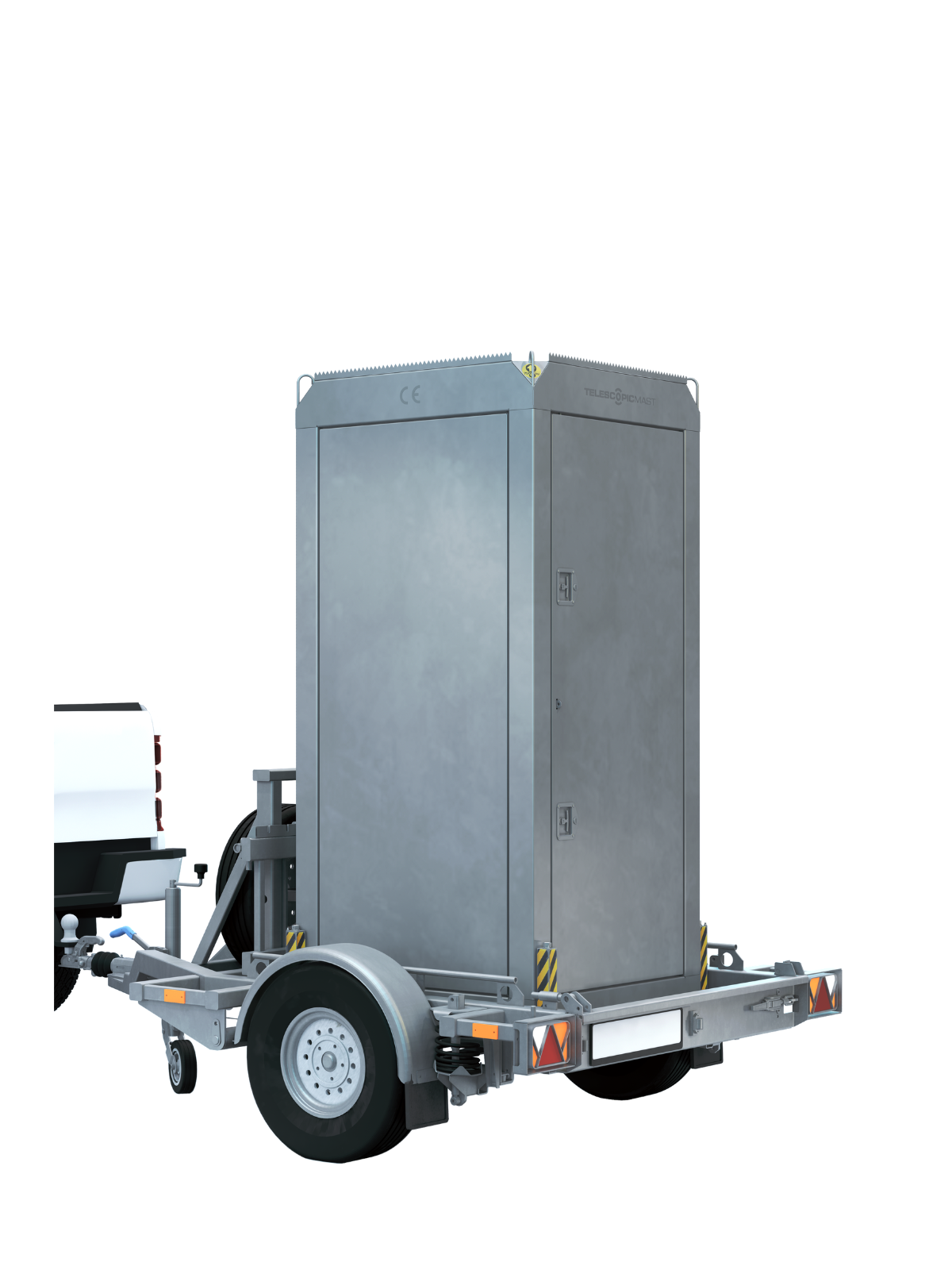
The cabinet is an empty, lockable steel volume. Batteries, solar panels, hydrogen or methanol fuel cells go inside, and a cellular uplink shares the mast with the cameras.

Certification a Critical Site Asks For

Documentation goes into the tender file as supplied. CE certification by TUV Rheinland with a 95 page test document, an ISO 9001 quality system, and ANSI certification for work outside Europe.

Deployed on Unmanned and Remote Assets

Security firms and asset owners run these platforms on infrastructure projects and remote sites across Europe.

Early fire detection at waste treatment facilities

GROMA247 | Austria

In waste processing, a fire that has just started can have serious consequences within a matter of minutes. GROMA247 therefore combines its autonomous 5A1 fire detection system with a mobile telescopic mast. This allows the solution to be moved flexibly between different shredder sites, enabling fires to be detected at an early stage, minimizing damage and preventing costly operational disruptions.


Units in operation
45
On-site personnel
None required
Cover
24/7
Control center
TUV and VdS certified

Where Asset Owners Deploy It

Five environments where a Mobile Tower Platform covers an asset that has no permanent camera position and no spare mains supply.
Solar & Wind

Solar Parks & Wind Farms

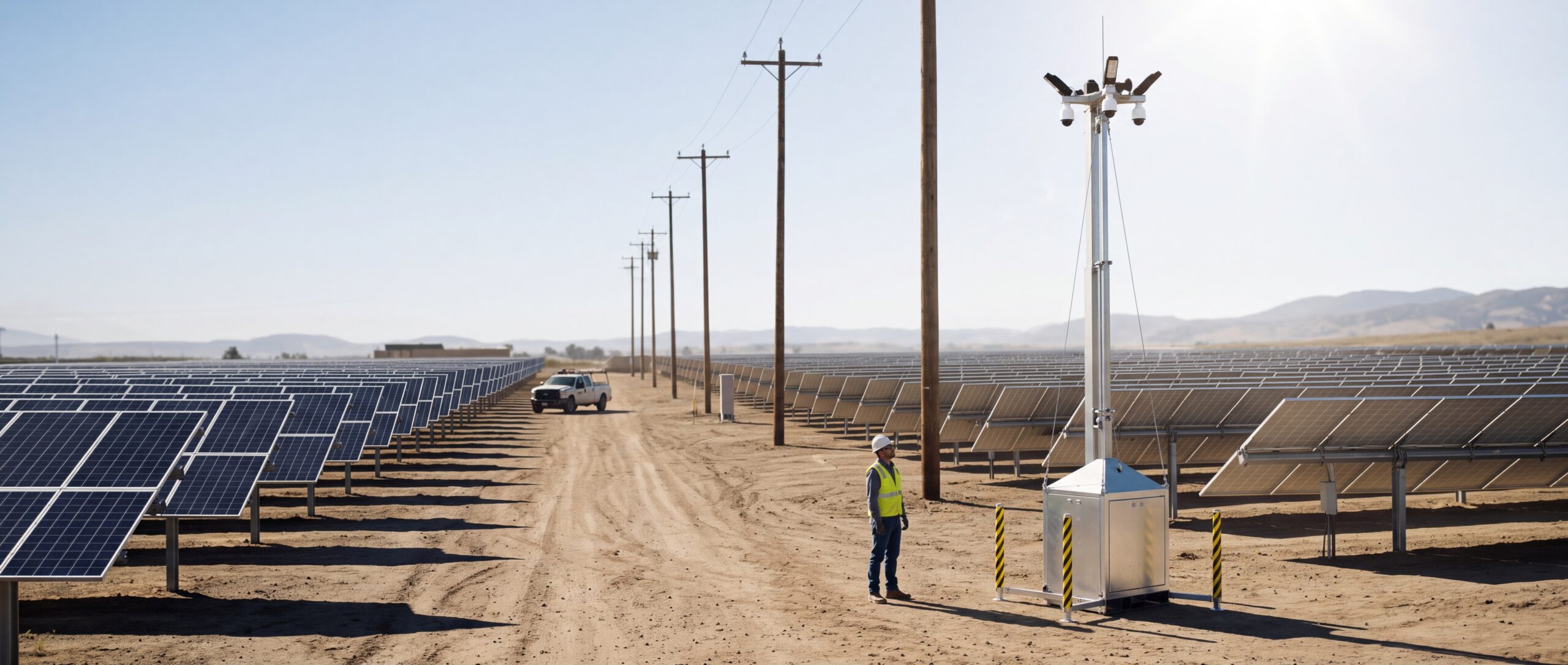
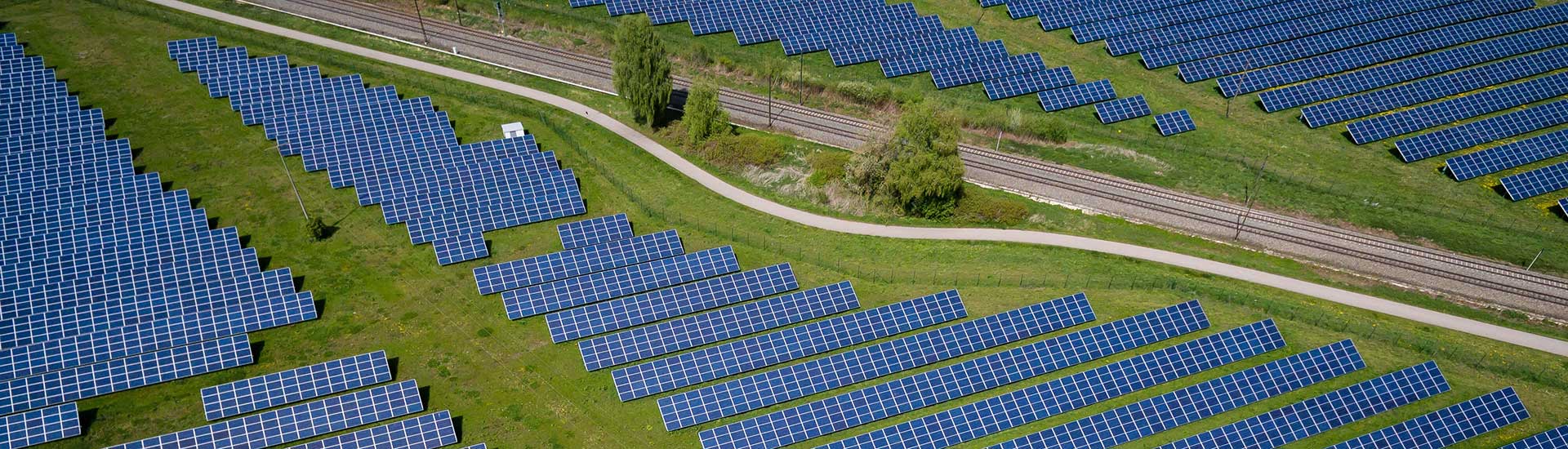
Large areas, one access track and cable runs that are worth stealing. A platform stands at the inverter compound or the gate and runs on its own solar.

Substations

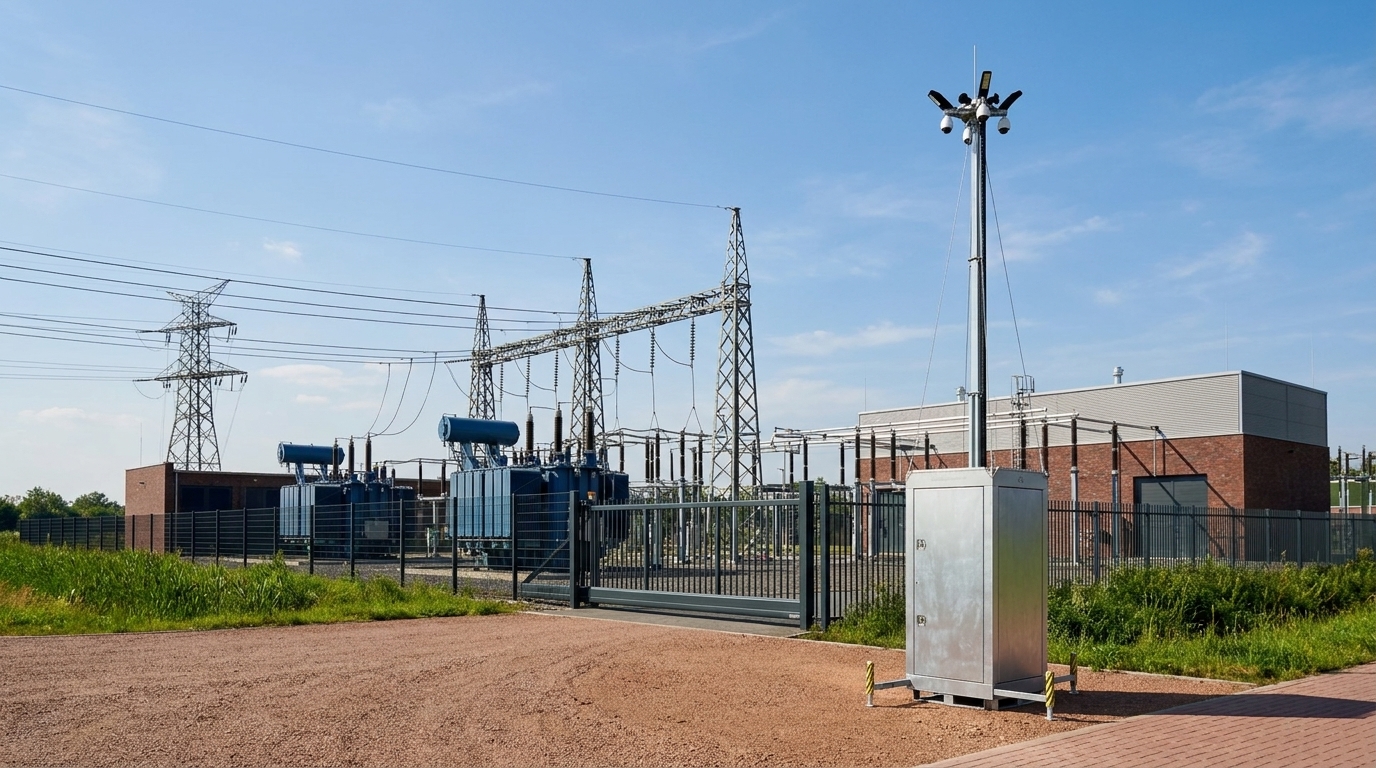
Substations & Grid Connection

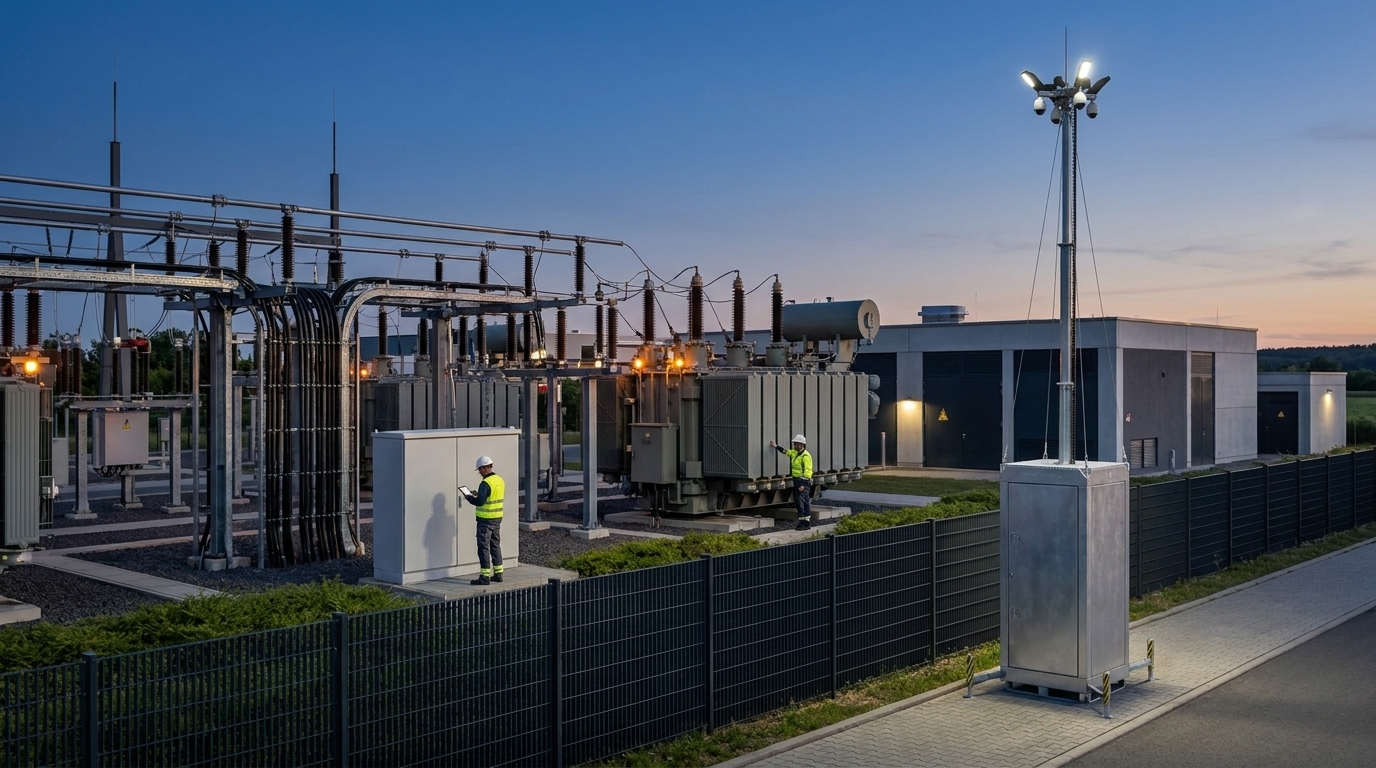
High consequence, low footfall. Thermal detection at height sees an approach across open ground long before anyone reaches the fence line.
Water & Gas
Water and oil

Water, Gas & Pumping Stations

Assets visited on a schedule, not watched continuously. Cellular uplink brings a remote position into the control room between visits.
Data & Refineries
Data

Data Centers & Refineries

Strict access control at the main gate, and contractor entrances, laydown areas and expansion plots with no permanent camera on them yet.
Waste

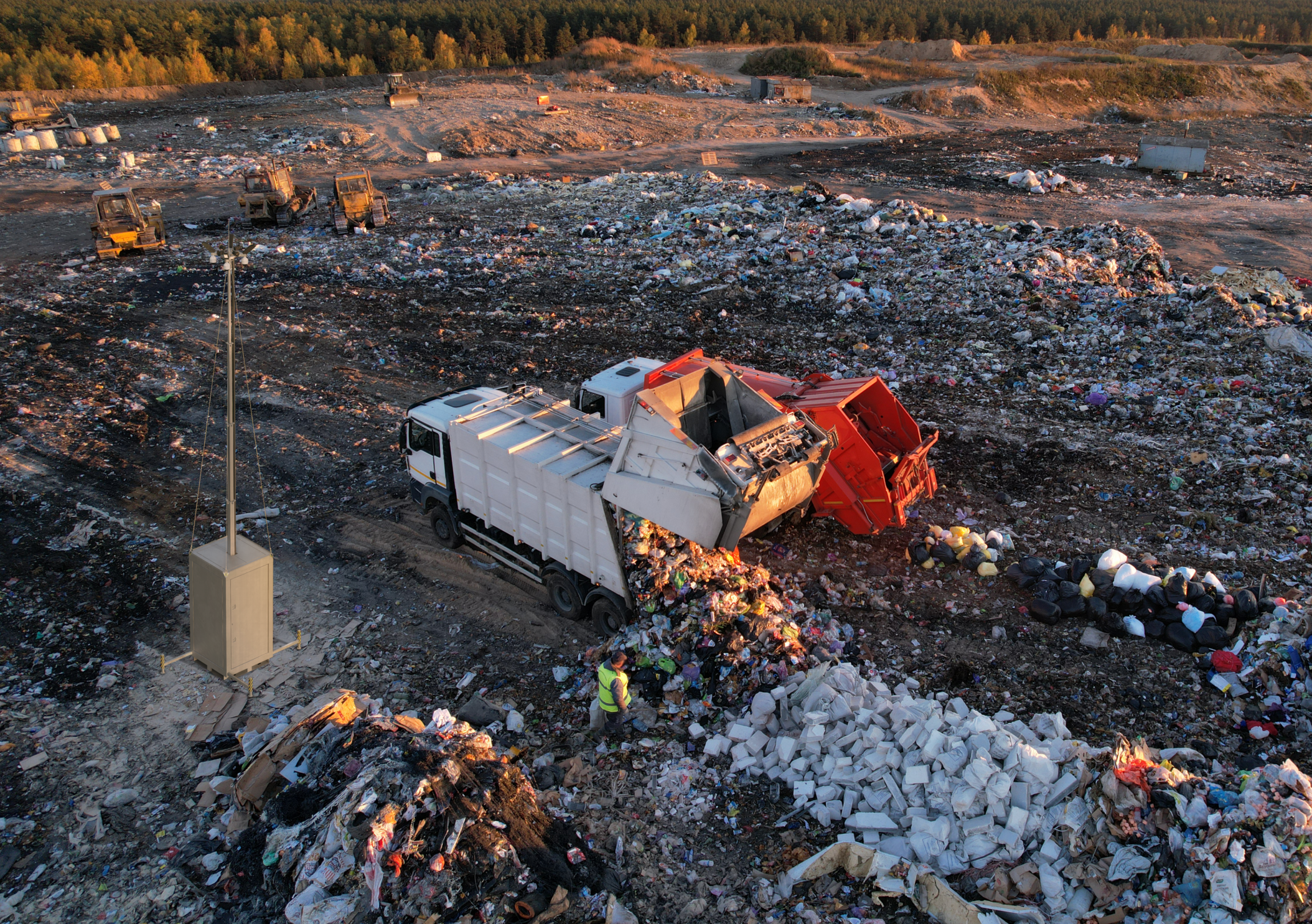
Waste & Recycling Sites

Heat detection in stored material catches a developing fire, and the same mast handles the theft and fly tipping problem at the gate.
Common Questions from Asset Owners and Utilities

Power, equipment, coverage, certification and ESG. What utilities, energy developers and their integrators ask before a platform goes on an unmanned asset.

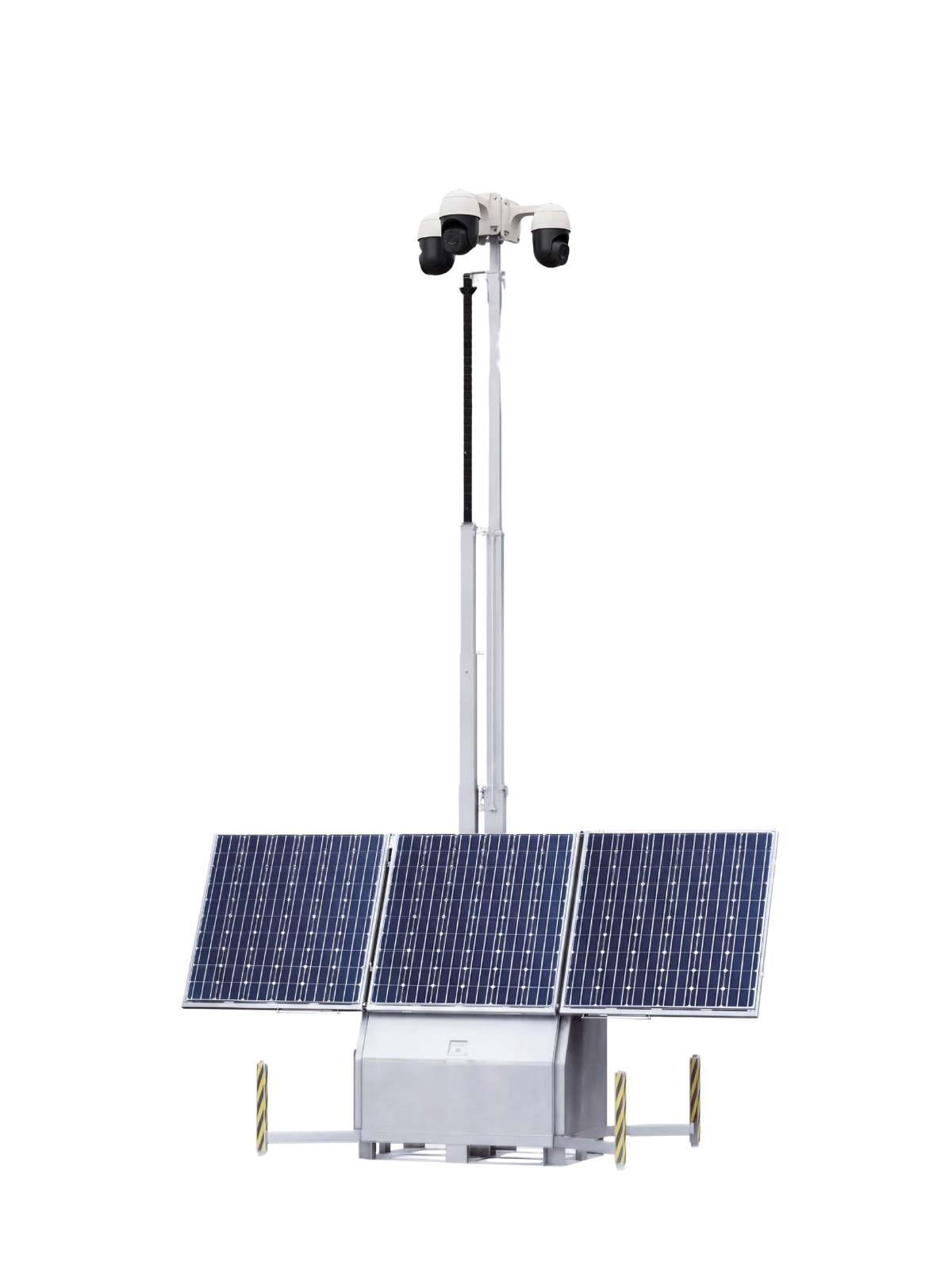
Weeks, and on the right configuration months. The cabinet takes batteries, and the MSB-Edge carries three 220 W solar panels. Hydrogen and methanol fuel cells from SFC Energy extend a deployment where sunlight alone will not carry the winter.

No, and that is deliberate. What arrives is a galvanized steel shell with the mast, the winch, the cabling and the mounting points. You or your integrator fit the cameras, thermal units, sensors and antennas you already specify. That typically costs 15 to 20 percent less than a pre-built tower carrying equipment you did not choose.

Fewer than a fixed installation would need, but the honest answer depends on the camera and analytics you mount. A mast at 20 feet with a 360 degree camera covers a wide arc, so platforms are usually positioned at the risk points, the gate, the inverter compound, the cable runs, rather than spread evenly along the boundary. A site survey settles it.

CE certification by TUV Rheinland, backed by a 95 page test and measurement document, plus an ISO 9001 quality management system and ANSI certification for deployments outside Europe. On many European sites that documentation is a condition of access.

That is what thermal changes. Thermal cameras register heat at a distance and keep working in rain, fog and full darkness, and AI analytics on the camera cut the nuisance alarms that make a remote site expensive to monitor. Four stainless steel 316 guy cables hold the top still, which removes camera shake as a false alarm source.

The structure is 100 percent recyclable galvanized steel, production runs on renewable energy and heat is recovered during galvanization. Because one platform serves site after site over decades, fewer units are built in total. The platform supports UN Sustainable Development Goals 7, 8, 11 and 12.

Receive Personal Advice

Our team of experts is ready to help you find the right solution for your security needs. Fill out the form below and we will get back to you as soon as possible.

Gawain Guedry
Gawain Guedry
Director, North American Sales and Operations

Get in Touch

Have questions about our Mobile Tower Platforms? Our sales team is ready to help you find the perfect solution for your security needs.

Contact our Sales Manager

uptime-impact-ok